
Why a Hardscape Contractor Should Understand Grading, Runoff, and Water Management

When most homeowners plan a new patio, walkway, retaining wall, or outdoor living space, they usually focus on the exciting parts first: the paver style, the border color, the fire pit, the seating wall, the lighting, and the overall look of the finished space. That makes sense. Those are the features you see and enjoy every day.
But the real success of a hardscape project is usually decided by something far less visible: how well the contractor understands grading, runoff, and water management.
A beautiful patio can still fail if water is allowed to collect on the surface, saturate the base, wash out the surrounding areas, or drain toward the home. A retaining wall can look perfect on day one and still develop issues if water pressure builds up behind it. A walkway can be installed neatly and still settle over time if the contractor does not understand how the site sheds water. That is why hardscape installation is never just about laying pavers or stacking wall block. It is about building an outdoor space that performs as well as it looks.
The best hardscape contractors understand that water affects everything. It affects the grade around the home, the way a patio drains, the stability of the base, the long-term performance of jointing material, the life of a retaining wall, and the overall durability of the finished project.
That is where an experienced company stands apart. We do not see a patio as just a patio. We see the whole property as a system. We look at roof water, downspouts, low spots, soil conditions, runoff patterns, wall drainage, surface pitch, and how each part of the landscape affects the other. That kind of planning is what helps outdoor living spaces stay cleaner, last longer, and protect the investment homeowners are making in their property.
Why Drainage Matters in Every Hardscape Project
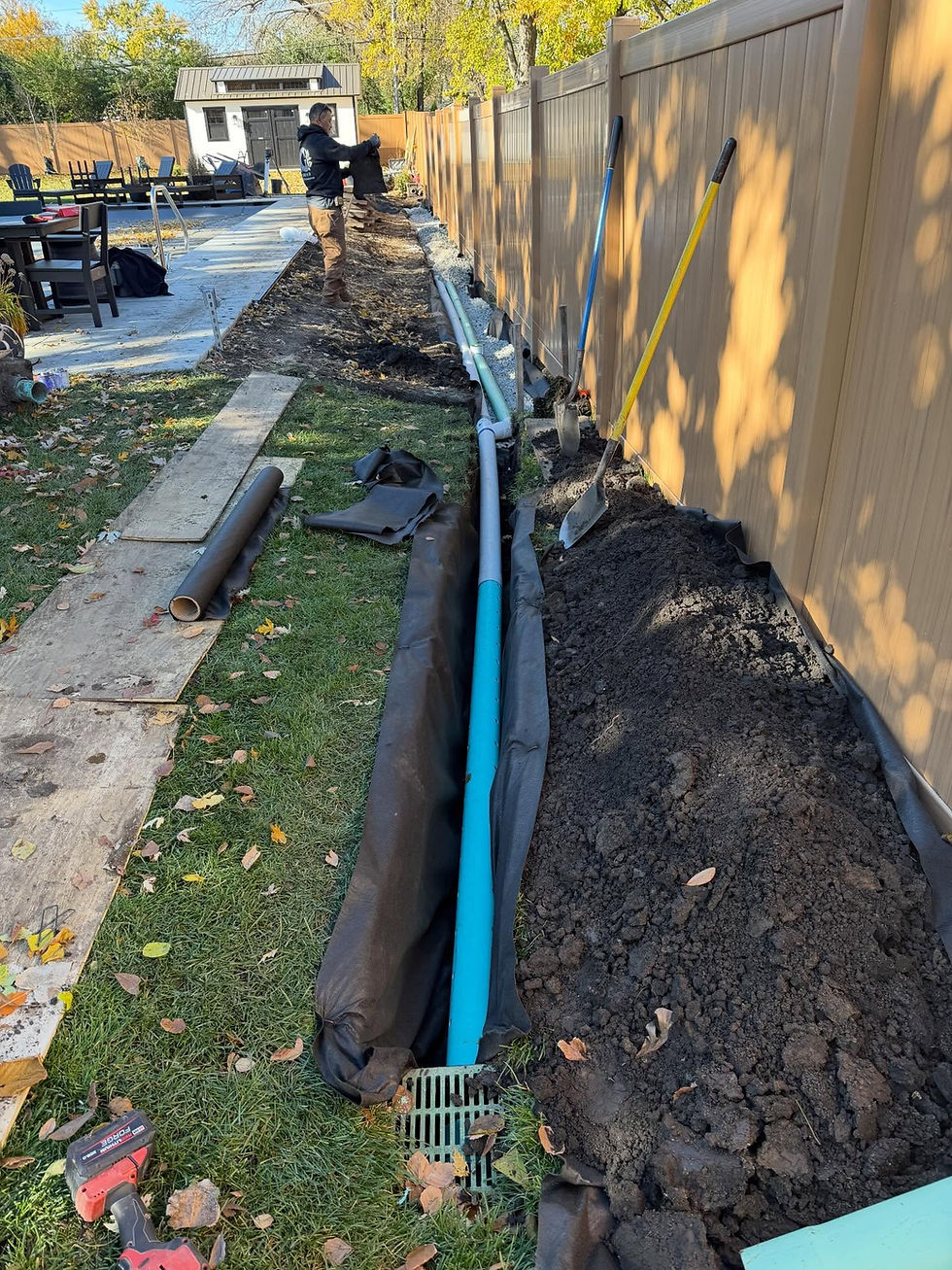
Most homeowners think of drainage as a separate issue from hardscaping. In reality, drainage and hardscape design go hand in hand. The moment you install a patio, walkway, driveway, retaining wall, or outdoor living feature, you change how water moves across the property.
That means every hardscape project needs to be planned with runoff in mind. If water is not directed properly, it can collect on the surface, soak into surrounding areas, weaken the base, wash out edges, create muddy spots, stain pavers, and lead to long-term structural problems.
This is one of the biggest reasons homeowners should hire a company that understands both hardscaping and drainage. A contractor should not only know how to build a beautiful patio. They should know how that patio will function after a heavy storm, during spring thaw, and through years of seasonal weather changes.
What Grading Means Around a Patio or Outdoor Living Space
Grading is the shaping of the land so water flows where it should and away from where it should not. It sounds simple, but it is one of the most important parts of any outdoor construction project.
Proper grading affects:
How water moves away from the house
Whether a patio drains correctly
Whether a walkway stays dry and stable
Whether planting beds hold water
Whether runoff creates erosion around the project
Whether low spots form in the lawn or beside the hardscape
A patio should not be built without considering how the surrounding property slopes, where water currently collects, and how the finished elevation will affect everything around it. Sometimes the patio itself is not the issue. Sometimes the real problem is the grade around the house, downspout discharge, poor soil drainage, or a low area in the yard.
That is why grading is not just a prep step. It is part of the design.
How Poor Runoff Planning Damages Patios, Walkways, and Retaining Walls
Water is one of the most damaging forces in any outdoor project. It does not need a major storm or flood to cause problems. Even repeated small amounts of poorly managed water can slowly shorten the life of a hardscape installation.
Poor runoff planning can lead to:
Standing water on patios
Washed-out polymeric sand
Edge erosion
Base saturation
Shifting or settling pavers
Algae or staining on the surface
Muddy transitions into lawn areas
Water draining back toward the home
Excess pressure behind retaining walls
Freeze-thaw damage in colder seasons
Many of these problems do not show up immediately. That is what makes them dangerous. A patio may look beautiful when it is first installed, but if runoff was never handled correctly, issues can appear later and often cost far more to fix than they would have to prevent.
Why Base Preparation Is Really a Water Management Decision
Homeowners often hear about gravel base depth as if there is one standard answer for every project. There is not. The right base depends on site conditions, soil type, water movement, and the load the area needs to support.
The base does much more than support pavers. It plays a major role in drainage and long-term performance. If the wrong base material is used, or if the site is holding water, the system can become unstable over time.
That is why an experienced contractor looks at:
Soil conditions
Existing drainage issues
Water volume from nearby roofs or slopes
Load requirements
Surface elevation
Whether the system should shed water or help move water through it
A proper base is not just about what goes under the pavers. It is about how the entire system functions together.
The Difference Between Surface Drainage and Subsurface Drainage
A good hardscape contractor should understand both surface drainage and subsurface drainage.
Surface drainage is how water moves across the top of the patio, walkway, driveway, or lawn. This depends on slope, pitch, grading, and the direction the finished surface is sending water.
Subsurface drainage is how water behaves below the surface. This includes what happens in the base, the surrounding soils, behind retaining walls, and around buried drainage lines.
Some projects mainly need proper surface pitch. Others need much more than that. If water is sitting in the subgrade, collecting behind a wall, or saturating the area from roof runoff, surface slope alone may not solve the issue.
This is why a contractor should understand the full picture. It is not enough to make a patio look level and clean. It has to function both above and below the surface.
Why Retaining Walls Always Need Drainage Planning

Retaining walls are one of the clearest examples of why hardscape and drainage should never be separated. Most homeowners look at the face of the wall. Professionals look behind it.
A retaining wall that holds back soil also has to deal with water. Without proper drainage, water can build up behind the wall and increase pressure over time. That pressure can lead to staining, shifting, bulging, or structural failure.
Proper retaining wall planning should include:
Suitable base preparation
Free-draining backfill
Drainage stone where required
Pipe or outlet planning where appropriate
Grade awareness around the wall
Understanding where the water will go once it is collected
A wall is not just stacked block. It is a system that must be built to handle both earth pressure and water pressure.
How Downspouts and Roof Water Affect Hardscape Projects

One of the most common mistakes in patio and walkway projects is ignoring where downspouts discharge. Roof water can release a surprising amount of concentrated water in exactly the wrong place.
If a downspout empties near a patio, walkway, retaining wall, or planting bed, it can:
Saturate surrounding soil
Create washout near edges
Overwhelm low spots
Cause staining or algae
Erode mulch and soil
Shorten the life of the hardscape
That is why downspouts should always be evaluated before a hardscape project begins. In many cases, part of building a successful patio means rerouting roof water, burying downspouts, or directing runoff to a more appropriate outlet.
Homeowners often think drainage upgrades are extra work. In reality, they are often what protect the patio from future damage.
Why Soil Conditions Change the Right Installation Approach
Not all properties drain the same way. Soil conditions play a major role in how water behaves. Some yards drain relatively well. Others hold water, stay saturated, or contain dense clay that slows infiltration.
That means two patios of the same size may require different installation strategies depending on the property. A contractor who understands drainage will evaluate more than just the layout and material choice. They will also consider:
Whether the soil holds water
Whether the area stays wet after storms
Whether nearby grades push water into the project
Whether low areas are trapping runoff
Whether the subgrade needs special attention
Whether the project should incorporate more drainage-focused construction methods
This is one more reason experience matters. The right solution is not always the same from one property to the next.
Why Homeowners Should Hire a Company That Specializes in Both Hardscape and Drainage
When one company understands both drainage and hardscape construction, the homeowner usually gets a better result. The design is more realistic, the installation process is more coordinated, and there is less chance of important site issues being overlooked.
Hiring a company that specializes in both means:
The patio is designed with water movement in mind
Drainage concerns are addressed before the build begins
The finished elevations make sense for the property
Downspouts, runoff, walls, and hardscape work together
The project is built to perform, not just look good
There is better accountability from start to finish
Too many outdoor projects are designed for appearance first and function second. That is usually where problems begin. The best projects are the ones where beauty and performance are planned together from day one.
Questions Homeowners Should Ask Before Hiring a Hardscape Contractor
Before hiring a contractor for a patio, wall, walkway, or outdoor living space, homeowners should ask questions that go beyond style and price.
Important questions include:
How will water drain off this patio or walkway?
Will this project change how runoff moves across my yard?
Are my downspouts going to be a problem?
How are you handling grade around the home?
What kind of base are you planning, and why?
Do my soil conditions affect the install?
How will water be handled behind the retaining wall?
Are there low spots on the property that need to be corrected first?
Is this project being designed to last through heavy rain and seasonal weather?
A good contractor should be able to answer these clearly. If they cannot explain how water will be managed, that is a red flag.
The Real Difference Between a Basic Patio Installer and a True Hardscape Expert
There is a big difference between someone who can install pavers and someone who truly understands how to build an outdoor space that lasts.
A basic installer may focus mostly on the visible finish:
The paver pattern
The cuts
The border
The color blend
The final appearance
A real hardscape expert also focuses on the hidden performance factors:
Grading
Runoff direction
Base construction
Soil conditions
Drainage planning
Wall pressure relief
Edge stability
Water movement around the property
That hidden work is what often determines whether the project still looks and functions well years later.
Why Smart Water Management Protects Your Investment
A patio, retaining wall, walkway, or outdoor living space is not a small purchase. Homeowners want it to be beautiful, functional, and long-lasting. That only happens when water management is treated as a priority, not an afterthought.
A properly planned hardscape project can help:
Reduce standing water
Protect the home from poor runoff
Improve overall property drainage
Support better long-term stability
Minimize maintenance issues
Keep outdoor spaces cleaner and safer
Extend the life of the installation
The best-looking project is not always the one with the flashiest design. It is the one that still performs beautifully after years of weather, foot traffic, and seasonal change.
Final Thoughts
A homeowner may call for a new patio, a front walkway, a retaining wall, or a full backyard outdoor living space. What they really need is a contractor with the judgment to understand how that project will affect the property as a whole.
That means understanding where water is coming from, where it needs to go, how the grade should be shaped, how the base should be built, and how every part of the installation should work together.
That is why a hardscape contractor should understand grading, runoff, and water management. Because the success of the project is not just in how it looks on installation day. It is in how it holds up over time.
When hardscaping and drainage are planned together, homeowners get outdoor spaces that are not only beautiful, but built to last.
Frequently Asked Questions
Why is drainage important in a hardscape project?
Drainage is important because patios, walkways, retaining walls, and driveways all change how water moves across a property. Without proper drainage and grading, runoff can collect on the surface, saturate the base, cause erosion, and shorten the life of the project.
Can poor drainage ruin a patio?
Yes. Poor drainage can cause standing water, shifting pavers, washed-out joints, algae growth, edge erosion, and long-term base problems. A patio may still look good at first, but drainage issues often show up later.
Do retaining walls need drainage behind them?
Yes. Retaining walls need drainage behind them to help relieve water pressure. Without it, water can build up behind the wall and lead to staining, movement, or structural issues.
Should downspouts be addressed before installing a patio?
In many cases, yes. If downspouts discharge near the patio, they can flood the area, saturate nearby soil, and damage the finished installation. A qualified contractor should evaluate roof water before construction begins.
Why should I hire one company for both drainage and hardscape work?
Hiring one company that understands both means the project can be designed and built as one complete system. That usually leads to better drainage, better long-term performance, and fewer problems after installation.
Need a Hardscape Contractor Who Understands Drainage Too?
If you are planning a patio, retaining wall, walkway, or outdoor living space, drainage, grading, and runoff should be part of the conversation from the very beginning. We design and build hardscape projects with long-term water management in mind so your investment looks great, functions properly, and lasts.


Comments